
In September, a team of federal agents and prosecutors wanted to speak to me. My old roommate texted me a screenshot of an email he received from them.
“We have some reason to believe you, or someone in your household, may have been operating an Ethereum node during the timeframe of 2021 to 2023. - do you have a few minutes today to discuss that?”
My head was spinning with questions. What did they want with me? How did they come to this conclusion? Why was this coming from my old roommate?
“You are not in any way in trouble, we just need for technical reasons to prove that someone was operating a node in the geographic area of the Southern District of New York.”
Reading that line made me somewhat reassured. Running a node wasn’t illegal, but the government hadn’t always been friendly to crypto people. It felt like a situation where I could only lose, and I wanted no part of it.
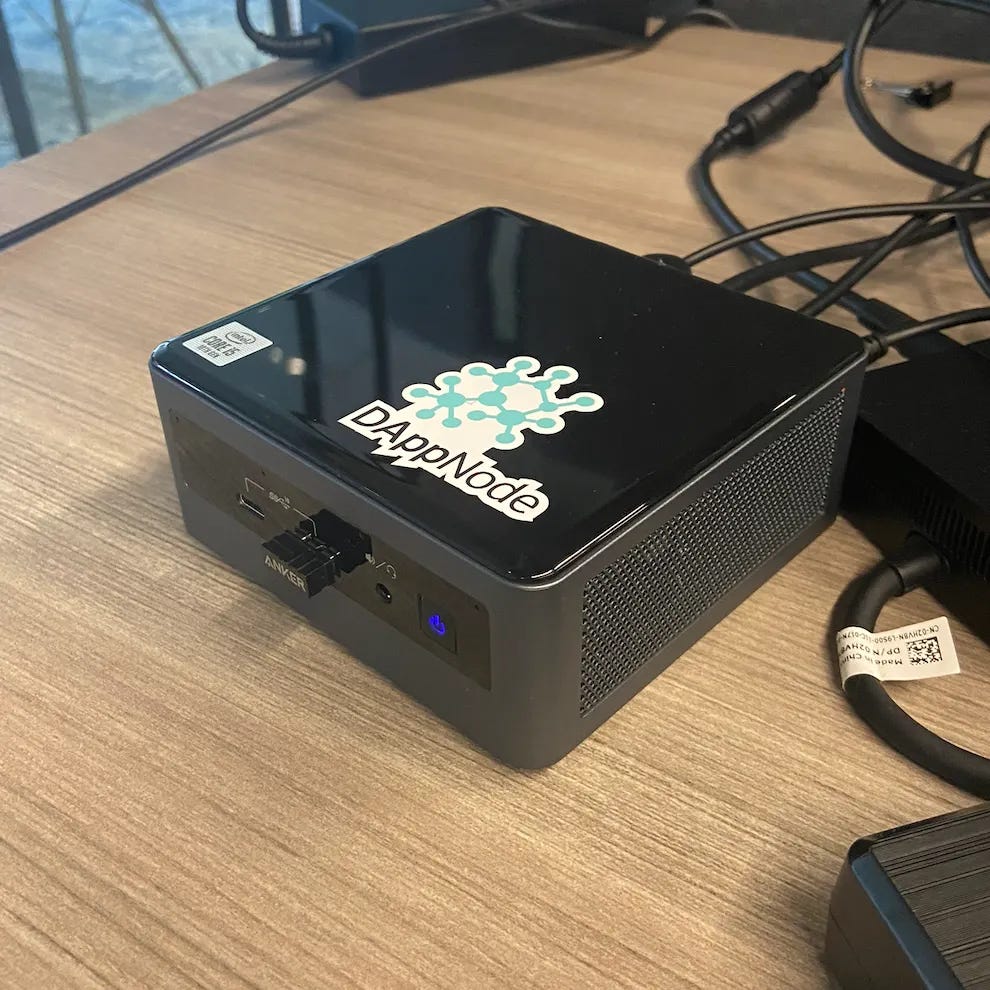
Still, it was true. I had run a node in the past. It is a computer that stays on 24/7, runs software that keeps a copy of the blockchain, and works with other people’s nodes around the world to ensure transactions follow the rules. I was running one because I liked Ethereum, got rewards for doing it, and it helped me learn some new things.
Nervous about my own ignorance of the law, I made a few calls. My FBI agent friend assured me it wasn’t a scam. My lawyer friend informed me they were probably trying to “hook” me to testify at a trial. And my smart friend told me to ignore it. I didn’t owe these guys anything. Whatever they were doing was not my problem.
That advice was my favorite. I had already left New York 8 months prior. Now, I was between homes, visiting my grandma in California, and moving to Kazakhstan in two weeks. If I got wrapped up in this, it could hold me back indefinitely.
Ultimately, I lacked the guts to ghost the government. I scheduled the call and hoped I was one of dozens of guys who received that email. With any luck, they’d look at my situation, and pass.
I called in from my grandma’s swing set and said hi to the team. The prosecutor addressed me as Mr. Brodeur, and immediately I questioned my choice of makeshift office. Surely someone distinguished as Mr. Brodeur would never sit on a swing.

The prosecutor said his team was trying a guy who’d stolen over $50 million in crypto. They had the evidence, including a message where he bragged about pulling it off. What they were missing was something called venue, a rule written into the Constitution, which says that a crime has to be tried in the district where it occurred.
Venue came to be when Britain threatened to ship colonists across the ocean to be tried in England, far from their peers and any sympathetic jury. So in 1787, the Founding Fathers wrote venue into the Constitution to make sure that never happened.
But venue doesn’t make sense when applied to the internet and crypto. Crypto transactions, including the ones this guy used to take the money, happen everywhere and nowhere at once. Thousands of nodes around the world checked the same transactions mine did. But in the eyes of the law, mine was special because it was in the Southern District of New York, where I used to live, and where my node happened to be plugged in.
He went on to ask about the node. What kind of computer it was, the dates I ran it, and the building I lived in before confirming I was a fit. I tested my involvement one last time, “Are you asking me or telling me you need me for this?”
My captor smirked and kindly said, “You’d be surprised how hard it is to find someone who ran a node in a given area historically. We were actually worried he may get off on a technicality. If you stop responding or say no, we’ll subpoena you. Someone will come hand you a piece of paper that informs you that you need to come in. I’d prefer not to do that.”
I was curious how fast they could find me, but not curious enough to test it, and agreed to help.
I would have been less reluctant leading up to this had I felt my contribution was logical. My node didn’t make the defendant more or less guilty or provide any necessary data. This was rule following for the sake of rule following, and everyone involved knew it. The rule created to keep Americans out of court was dragging me into it. However, I couldn’t blame them for calling me in. Satisfying the rule is infinitely easier than amending the Constitution.
Knowing I had no choice, I felt relieved of the uncertainty and resolved to be as helpful as possible. He also said the testimony would likely land right before my flight to Kazakhstan, so nothing would be delayed.
Now that we were best friends, I felt comfortable asking how he found me.
They pulled IP addresses for Etherscan accounts that were tracking node rewards, figuring anyone watching a node was probably running one. Then they matched those against Verizon’s addresses for the Southern District. This explained why he initially emailed my old roommate, who had set up the internet.
For years I’d listened to people rant about lack of online privacy, but never before had my internet footprint been tracked so blatantly. I felt simultaneously exposed and impressed.
We exchanged pleasantries and it was set. I was going to testify.
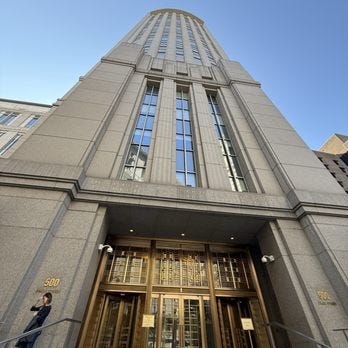
Two weeks later, I showed up to the courthouse, headed through the metal detectors, turned my phone in, and met one of the special agents who escorted me up to the 14th floor. The dark oak courtroom doors were looming, the kind you’d expect to see at Hogwarts. Behind them I could hear murmurs but nothing concrete.
To the right were two smaller doors with a metal placard between them that read “Witness Room.” They were closet-sized and windowless. I was told to wait until my name was called, and for the first time since high school, I experienced hours of true, uninterrupted, government-mandated boredom.
On the bright side, now that I was here, I knew for sure my move wasn’t getting delayed. It allowed me to look at it all as a unique experience. I wasn’t just staring at a wall. I was staring at a wall in court.
I was counting the small stars on the 1990s tan carpet when the special agent poked his head in to say “You’re up next” as if I needed to stop doing nothing to prepare to testify. This routine was repeated every hour or so, but with new phrases like “Almost there” and “Should be any minute now” before 5pm when he ultimately said, “We’re going to need you to come back tomorrow.”
Back again the next morning, I walked into the courthouse with a newfound swagger. “You know where you’re going?” the guard asked. “Yeah, this isn’t my first rodeo” I said. This time, I sat in the witness room for just a few minutes before my name was called.
I walked through those big doors and on the other side were 50 people staring directly at me. Everyone past the bar was playing a role in putting this guy away, and soon I would too. For two weeks I’d thought about this only in terms of me, but now I was seeing the bigger picture.
A woman at the opposite end of the room broke the silence and motioned for me to come towards the front. She had me take the oath and then my seat to the right of the judge.
The federal prosecutor, no longer a rectangle on a video call but an actual person, asked me to state my name and spell it. I learned that lawyers are very thorough when we started with groundwork questions: What is a blockchain? What is Ethereum? What does a node do?
Then came personal questions: When did you live in New York? Where? Did you run a node? They came as a barrage of smaller, simple-to-answer questions, but that’s what they added up to. I answered them all, telling the truth, the whole truth, and nothing but the truth.
Cross-examination was simple, the defense attorney asked if I had any knowledge of the protocol or the man on trial. I didn’t, and I was dismissed. I’d been on the stand for maybe ten minutes.
To me, the contrast between crypto and court was clear. Crypto has a motto: “Don’t trust, verify.” There were plenty of ways to verify I’d run that node, but court didn’t need any of them. All I had to do was take an oath. Court’s motto might be “Don’t verify, trust.”
The special agent shook my hand, told me good job, and said I was free to go. I stepped out into a gray September day in my old neighborhood, travel plans intact. I felt proud of having done my civic duty and embarrassed that I’d tried to avoid it. No justice system is perfect, but ours works. And for 1.5 days, I got to be a small, procedural, necessary piece of it.